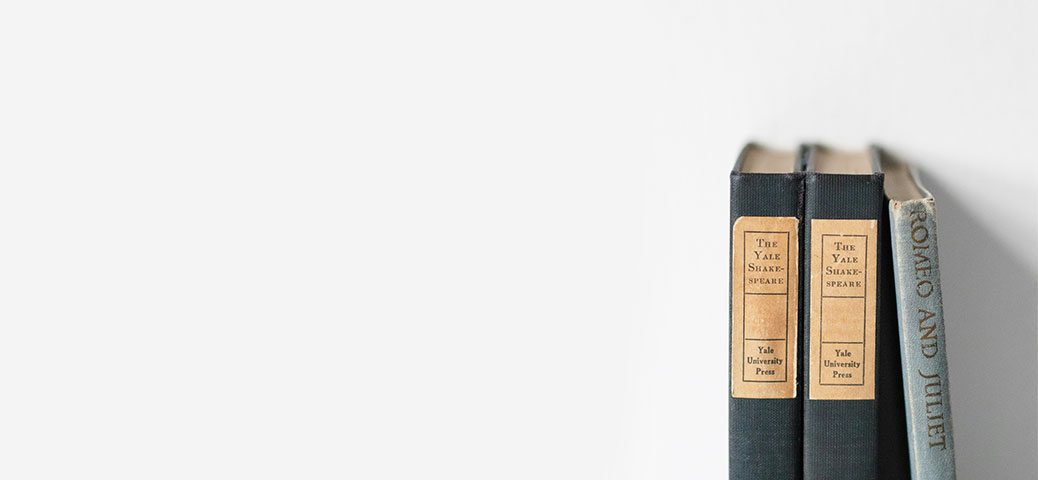
Book spines: which to choose?
We all know what a book spine is - or at least we think we do. But in the world of bookbinding, not all spines are created equal. Let’s dive into the details, explore the different types of book spines, and find out how to choose the perfect one for your next publishing project. Enjoy the read!
The anatomy of a book spine
Simply put, the spine is the outer edge of a book that connects the front and back covers, securing the book block inside. In technical bookbinding terms, it’s the central surface of the cover spread where the pages (leaves) or folded sections (signatures) are firmly joined together.
The spine plays several crucial roles in a book’s lifespan:
- Structural integrity: It holds the pages together – whether glued (in perfect binding) or sewn (in thread-sewn binding) – giving the book block its stability and strength.
- Identification & discoverability: It carries essential information like the author’s name, the title, and the publisher’s logo, making the volume easily identifiable on a crowded bookstore or library shelf.
Aesthetic appeal: As a core element of the cover design, a beautifully crafted spine catches the eye of potential buyers and enhances the book’s overall visual impact.
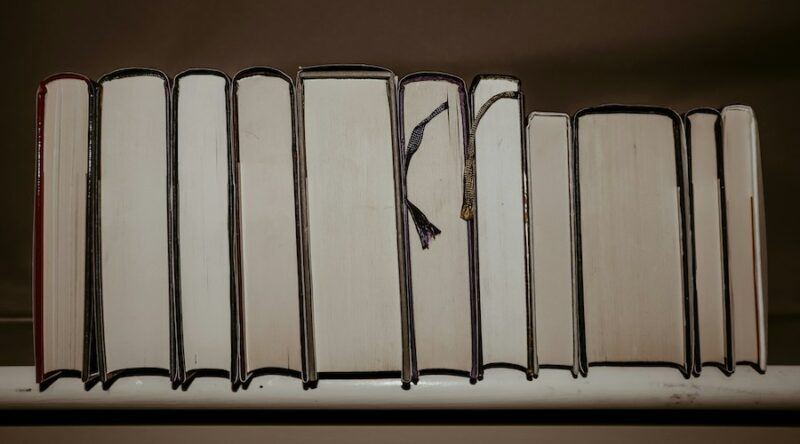
Types of book spines
When it comes to shape, there are two main contenders:
- flat spine
- rounded spine
By default, all softcover books (whether sewn or perfect-bound) feature flat spines due to structural and technological constraints. Hardcover books, however, give you the flexibility to choose between flat and rounded options.
A quick historical note: In traditional bookbinding, you could also find raised-band spines – a variation of the rounded spine. These featured cords (bands) sewn across the spine under the leather or cloth to reinforce the book block, creating characteristic ridges. For some, these bumps resembled a human backbone, which is supposedly where the term “spine” comes from!
The Exposed Spine (Open Spine Binding)
It’s also worth mentioning a highly popular, unconventional solution: the exposed spine. In this style of binding, there is no outer spine lining or cover wrap hiding the mechanics of the book. The raw book block, complete with its intricate thread sewing, is fully visible.
This striking, artistic aesthetic is a massive trend right now and is frequently used for premium notebooks, design portfolios, art catalogues, and creative publications. It can be applied to both softcover and hardcover projects.
Flat or rounded? How to choose the right spine
If you’re printing a softcover, the choice is made for you: the spine will be flat. But what if you’re designing a hardcover?
While you can theoretically round any hardcover spine, as printing experts, we have a golden rule: rounding works best for book blocks between 15 mm and 50 mm thick. Within this range, the shape is both visually appealing and structurally sound.
- If the book is too thin: Rounding looks unnatural, and the book block won’t have enough space to sit properly inside the cover.
- If the book is too thick: A rounded spine can look bulky, disproportionate, and unrefined.
In both of these extreme cases, a classic flat spine is the much safer and more elegant choice.
Does the book's genre matter?
Are there strict rules tying spine shapes to specific genres? Not really. It ultimately comes down to the publisher’s vision and personal preference.
However, rounded spines are traditionally favoured for higher-volume, prestigious editions – such as classic fiction, poetry collections, dictionaries, encyclopaedias, and premium coffee-table books.
Functionality: What works best?
When it comes to usability, the shape of the spine affects how the book behaves when opened. From a functional standpoint, rounded spines naturally offer better opening behaviour than flat hardcover spines, reducing stress on the binding and protecting the book from deformation over time.
Meanwhile, exposed spine bindings provide the ultimate “lay-flat” experience – the book opens perfectly flat on a table. However, because the spine is unprotected, this style is slightly less durable and isn’t recommended for publications intended for heavy, everyday wear and tear.
Final thoughts
Choosing between a flat and a rounded spine is largely a matter of design, proportion, and functionality. As a rule of thumb: avoid rounded spines in very thin books, consider them for medium-to-thick hardcovers to improve durability, and use flat spines where modern simplicity matters most.